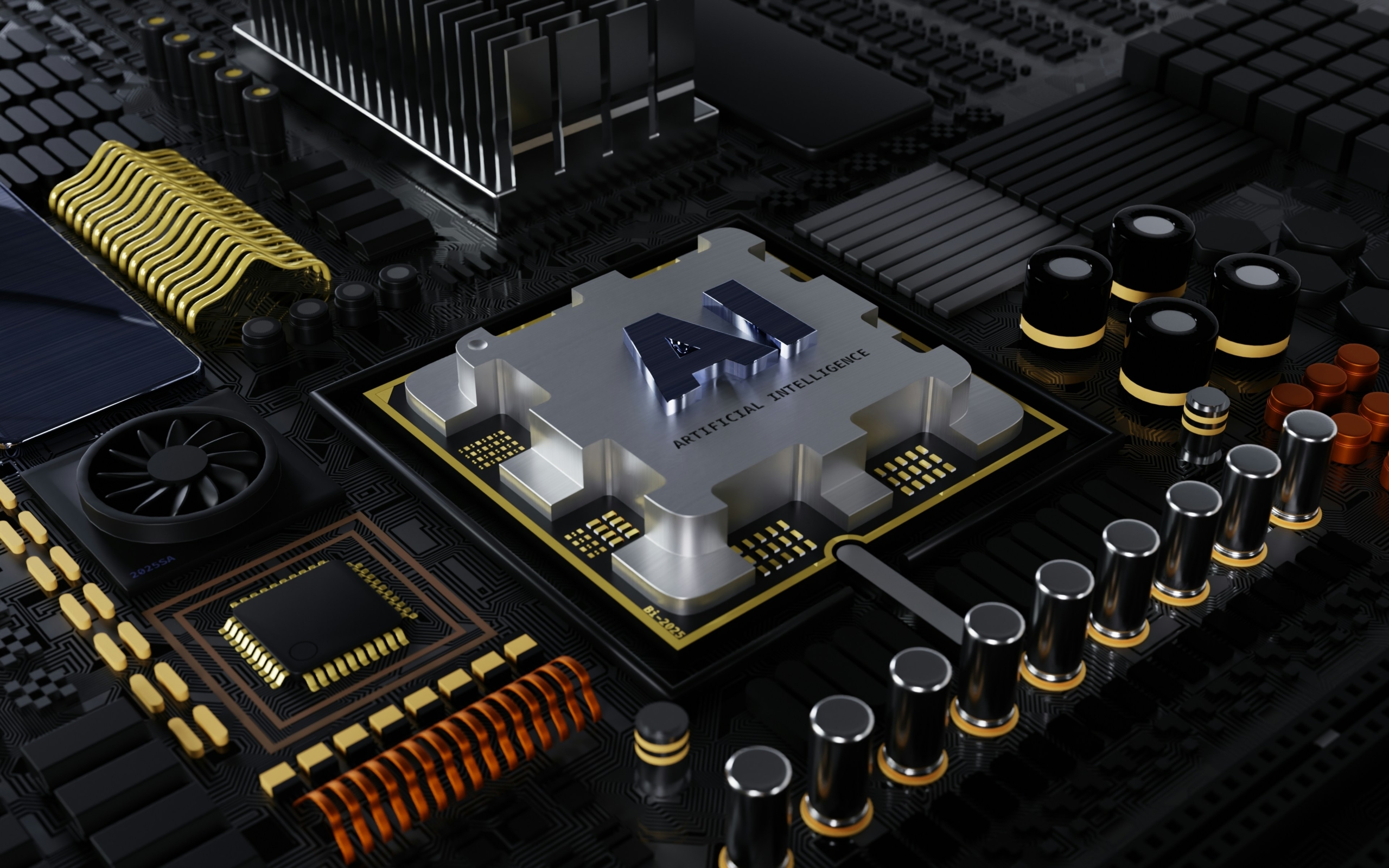
Artificial intelligence is often framed as a software revolution, but it’s true bottleneck is far more physical. AI does not scale on ideas alone; it scales on compute. And compute, today, means silicon. The intensifying AI chip wars are not a side story to the AI boom they are the story. The companies and nations that master AI hardware will shape the pace, economics, and limits of intelligence itself.
This is no longer about marginal performance gains. It is about structural advantage in a world where a single model training run can cost hundreds of millions of dollars. As AI systems grow larger and more autonomous, computation has become the dominant constraint. We are moving from a code-first era into a compute-first reality.
AI chips are no longer interchangeable components. They define the entire stack. Hardware choices determine training velocity, operational economics, developer ecosystems, and the ability to compound innovation over time. A 10% efficiency gain can translate into billions of dollars in savings, making control over silicon more valuable than software optimization alone.
What appears to be a competition between semiconductor companies is a race toward vertical integration. The winners will be those who align five layers: specialized hardware architectures, optimized software tooling, strong developer experience, hyperscale cloud orchestration, and guaranteed access to advanced manufacturing. This explains why cloud providers design custom accelerators, chipmakers build software ecosystems, and governments treat fabrication capacity as a strategic asset.
The implications extend far beyond technology. As compute becomes the gating factor, access to advanced AI will increasingly reflect access to physical infrastructure rather than raw talent. This creates a growing compute divide, between those who can build frontier models and those who must rely on them. It will shape economic power, industrial automation, healthcare innovation, and global influence.
For leaders, the question is no longer “How do we use AI?” but “On whose silicon does our intelligence run?” The future of AI will not be decided by prompts alone. It will be decided in silicon.